
- ZamanSafi
- 05 Apr 2026
Common Red Flags in Used Car Listings (Photos, Mileage, Paperwork)
A used car listing can look polished, well priced, and still be full of warning signs. Smart buyers know that the ad itself is the first inspection, long before a road test or a mechanic’s report.
That matters even more when you are buying across cities or borders, where photos, mileage claims, and paperwork often shape the first decision. Whether the vehicle is in the [UAE](https://zamansafi.com/buyusedcarsindubai) or headed to [Kenya](https://zamansafi.com/carsforsaleinkenya), [Uganda](https://zamansafi.com/carsforsaleinuganda), Tanzania, Zambia, or [Malawi](https://zamansafi.com/usedcarsforsaleinmalawi), early screening can save time, money, and risk.
## Why used car listing red flags matter before you visit
A listing is not proof of quality. It is a sales document, and some sellers present only the most flattering version of a vehicle. When details are missing, inconsistent, or overly polished, the issue is rarely accidental.
A careful review of the listing helps you separate normal sales language from signs of concealment. That approach gives buyers more control, especially when comparing many vehicles online in a short time.
## Photo red flags in used car listings
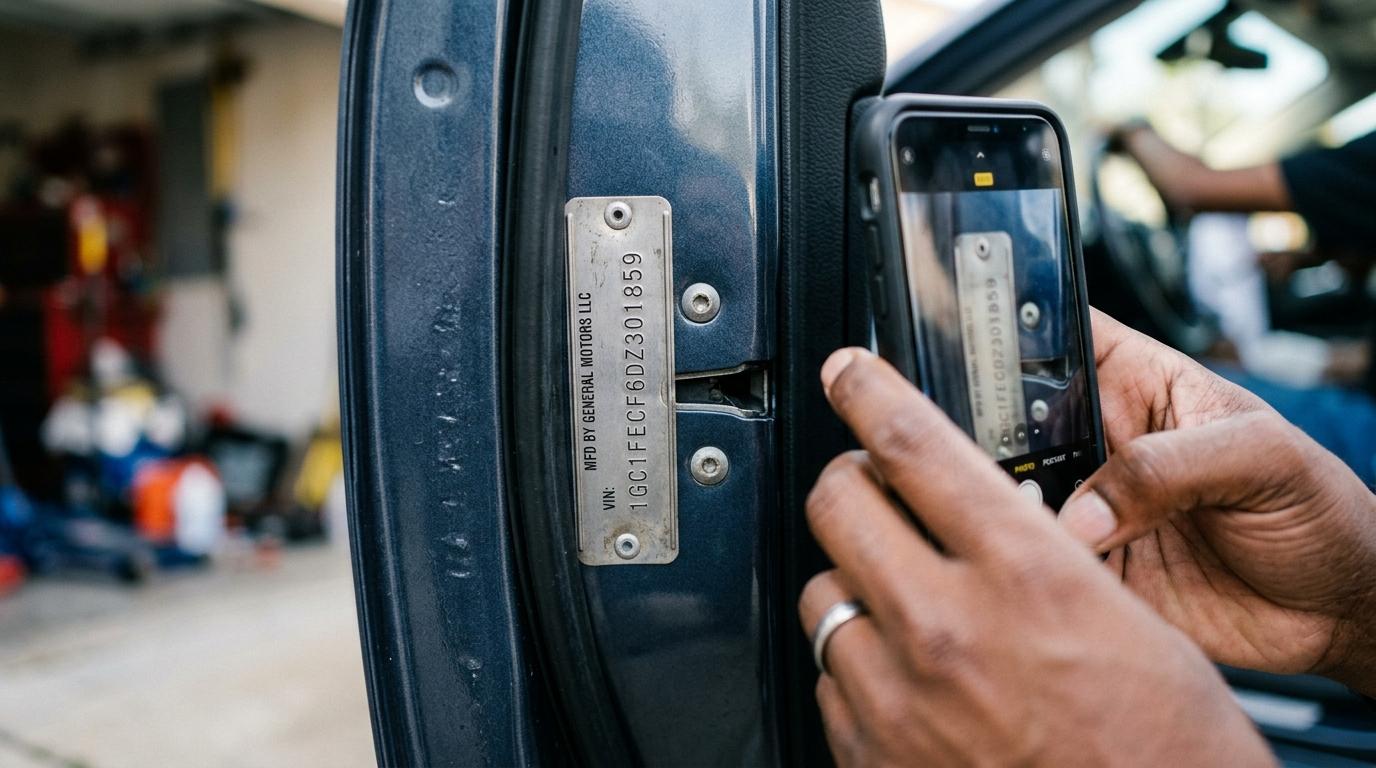
Photos should answer questions, not create new ones. Strong listings usually show the vehicle from all sides, include interior shots, and give close-ups of the odometer, VIN plate, wheels, engine bay, and any visible wear. Weak listings often do the opposite.
One of the clearest warning signs is selective photography. If every exterior image is taken from one angle, or the seller avoids the lower body panels, that may be an attempt to hide dents, rust, scratches, or poor repairs. Lighting can also mislead. Deep shadows may cover panel gaps and body damage, while overly bright images can make worn paint look fresh.
Photo editing is another issue. Artificial background blur, soft edges around badges, strange reflections, or obvious retouching around bumpers and doors should make you pause. A genuine seller may tidy a photo, but heavy editing often points to defects being hidden or images being reused from somewhere else.
Backgrounds tell a story too. If one listing shows the same car in several unrelated locations, or if the surroundings look inconsistent from shot to shot, ask why. Reused stock images and copied photos are common in fraudulent ads.
Common photo gaps that should slow you down:
- One side only
- No interior dashboard view
- No seat close-ups
- No tire tread photos
- No engine bay image
- No odometer photo
- No VIN plate photo
When a seller avoids those basic images, the risk is not just cosmetic. It can point to accident repairs, mileage doubts, or even a car that is not actually available.
## Mileage red flags in used car listings
Mileage is one of the first numbers buyers focus on, which is exactly why it gets manipulated. A very low reading can look like a bargain, yet mileage only makes sense when it matches the car’s age, wear, and service history.
A ten-year-old vehicle with unusually low mileage is not automatically a bad buy. Some cars really are used lightly. The problem starts when the odometer says “low use” but the cabin says “high use.” Worn pedals, shiny steering wheels, sagging driver’s seats, faded switchgear, and heavy wear on door handles often tell a different story.
Service records can reveal the truth quickly. If an older maintenance invoice shows higher mileage than the current listing, that is a major warning sign. Even smaller inconsistencies matter. Flat periods where the recorded mileage hardly changes for years, followed by a suspiciously low figure, deserve close review.
A useful benchmark is average annual use. Many vehicles accumulate a fairly predictable amount of distance each year. A car far below that range may still be genuine, though it needs better documentation than usual. Low mileage should increase your curiosity, not lower it.
Mileage claims deserve extra checks when you see any of these patterns:
- **Low odometer, heavy wear:** Interior condition does not match the claim
- **Gaps in records:** Large periods with no service history or inspection trail
- **Mileage reversal:** Older records show a higher number than the current reading
- **Too good for age:** Distance appears far below normal yearly use without a clear reason
- **Seller hesitation:** Vague answers when asked for service invoices or diagnostic checks
For remote buyers, a diagnostic scan and a vehicle history report can be very valuable. On many vehicles, the electronic control units store mileage-related data that can expose tampering. That extra layer of verification is often worth the small cost.
## Paperwork red flags in used car listings
Paperwork is where a deal becomes real. If the documents are incomplete, altered, or inconsistent, the vehicle may be impossible to transfer legally, difficult to register, or tied to a history the seller does not want to discuss.
The first red flag is missing core documentation. If the seller cannot provide title, registration, ownership documents, or a valid bill of sale, there is no good reason to move forward. In export or cross-border transactions, this becomes even more serious because customs, port clearance, and registration authorities rely on precise paperwork.
The second concern is mismatch. The VIN on the dashboard, chassis, registration papers, service invoices, and listing should all match exactly. A single wrong digit is not a minor detail. It could point to clerical sloppiness, forged papers, or a vehicle assembled from multiple sources after major damage.
Branded title history also deserves close attention. Terms like salvage, rebuilt, or flood indicate significant prior damage. That does not automatically make the car worthless, though it changes risk, value, insurability, and long-term reliability. A listing that avoids this history while advertising the car as “excellent” is not being transparent.
Service records can also be manipulated. Handwritten logs are not always false, but gaps, rewritten dates, missing pages, and inconsistent workshop names should lead to more questions. A strong file shows continuity. A weak file feels stitched together.
## A quick red flag table for photos, mileage, and paperwork
Before contacting a seller, it helps to scan the ad through a simple lens.
| Area | What to check | Why it may be a red flag | What to ask for |
|---|---|---|---|
| Photos | Full exterior, interior, odometer, VIN, engine bay | Missing views may hide damage or prove the seller does not control the car | Fresh timestamped photos and video walkaround |
| Photos | Odd lighting, blurred edges, inconsistent backgrounds | Edited or reused images can hide flaws or support a scam | Extra photos in natural light |
| Mileage | Odometer reading versus age and interior wear | Low mileage may be inaccurate or rolled back | Service records, inspection report, diagnostic scan |
| Mileage | Gaps or reversals in recorded distance | History inconsistency can signal tampering | Vehicle history report tied to VIN |
| Paperwork | Title, registration, bill of sale, owner identity | Missing or incomplete documents can block transfer | Clear copies before deposit |
| Paperwork | VIN consistency across all records | Mismatch may point to fraud or error | Chassis and dashboard VIN photos |
## How to verify a used car listing before you commit
A cautious process does not need to be slow. In many cases, ten extra minutes of checking can remove the worst options from your shortlist.
Start with the photos. Run a reverse image search on one or two pictures. If the same images appear in older ads, other countries, or unrelated websites, stop there. Then ask the seller for new photos taken that day, including the VIN plate, odometer, engine bay, and a short video of the car starting. Honest sellers usually respond clearly because the request is normal.
Move next to the VIN. Use it to pull a vehicle history report where available, and compare the result with the listing. Look for recorded mileage, title branding, accident history, registration activity, and service entries. If the seller avoids sharing the VIN, that is a warning by itself.
Then verify the paperwork. Request readable copies before any deposit changes hands. Check names, dates, VIN format, document quality, and whether the seller’s ID matches the ownership records where required. If you are buying for export, confirm what documents are needed for [customs clearance](https://zamansafi.com/BlogDetail/export-documentation-support-title-invoice-and-compliance-paperwork) and registration in the destination country.
A strong pre-purchase process usually includes these checks:
1. Reverse image search on listing photos
2. VIN check through official or trusted history sources
3. [Independent inspection by a qualified mechanic](https://zamansafi.com/BlogDetail/pre-purchase-vehicle-inspection-condition-report-service)
4. Confirmation of ownership documents before payment
## Questions smart buyers ask sellers right away
The best questions are direct, specific, and easy to verify. Vague questions invite vague answers. Precise questions make weak listings fall apart very quickly.
Ask when the photos were taken. Ask whether the seller can send a current walkaround video. Ask whether the odometer photo was taken the same day the listing was posted. Ask if the VIN can be shared immediately. Ask whether the car has ever had major accident repair, flooding, airbag deployment, or insurance write-off history.
Listen to how the seller responds, not just what they say. Clear, consistent answers build confidence. Evasive replies, pressure tactics, or irritation over normal verification requests tell you a lot.
Useful seller questions include:
- **Can you send today’s photos:** Include VIN plate, odometer, tires, engine bay, and all four corners
- **Can you share service records:** Preferably dated invoices, not only handwritten notes
- **Has the car had accident repair:** If yes, what panels or systems were affected
- **Who is the legal owner:** Does the name match the registration or title
- **Can I arrange an inspection:** Independent inspection should never be treated as a problem
## Why verified listings matter more in cross-border used car purchases
When a buyer and seller are in different countries, trust must be built through records, inspection quality, and clean documentation. That is why [verified listings](https://zamansafi.com/BlogDetail/pickup-trucks-for-export-verified-listings-and-inspection-reports), detailed reports, and transparent seller communication matter so much in the used car trade between the UAE and African markets.
A buyer may never see the vehicle in person until after shipping. In that setting, missing photos are more serious, mileage doubts are more expensive, and paperwork errors can delay clearance or registration. Good sellers know this. They prepare better listings, keep records ready, and welcome verification.
That should encourage buyers. The market has many solid vehicles and many reputable sellers. The edge comes from screening listings with discipline, asking better questions, and refusing to be rushed by a low price or a polished ad. When photos are complete, mileage makes sense, and paperwork checks out, you are no longer guessing. You are buying with evidence.