
- ZamanSafi
- 27 Mar 2026
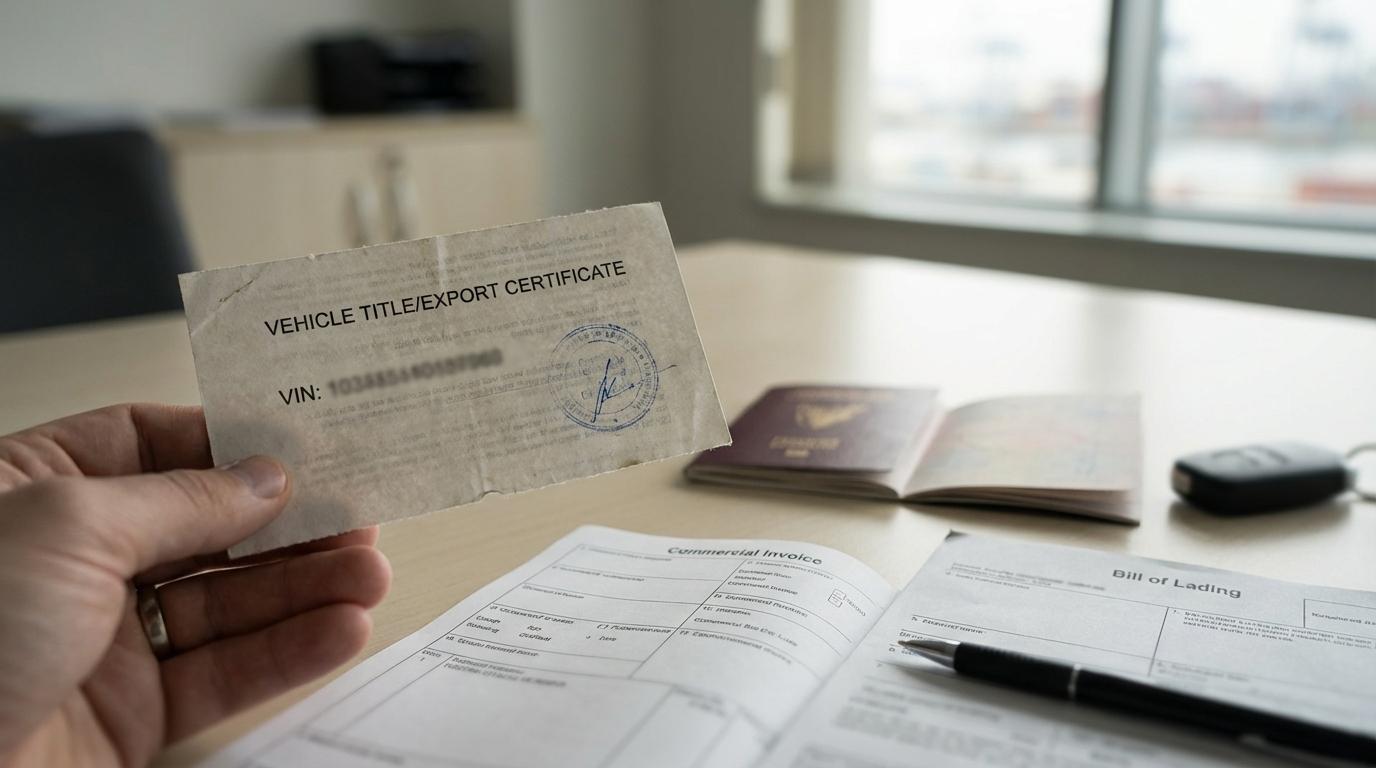
Export Documentation Support: Title, Invoice, and Compliance Paperwork
When a vehicle is ready to leave the UAE for an overseas buyer, the paperwork matters just as much as the condition of the car itself. A clean title, a correct invoice, and the right compliance documents help the shipment move with less friction, fewer questions from customs, and a much lower chance of delays at port.
For private buyers, [dealers](https://zamansafi.com/cardealers), and small businesses importing vehicles into African markets, that clarity creates real value. It protects ownership, supports customs clearance, and gives every party a clearer record of what was sold, what was shipped, and what the destination country expects to see.
## Clear documentation keeps vehicle exports on track
Vehicle exports involve more than one document and more than one authority. The seller, shipping line, customs office, freight agent, and importer may all rely on the same set of details, including the VIN, vehicle description, declared value, consignee name, and destination port.
That is why document support is not just about producing forms. It is about checking that each document matches the others and reflects the actual vehicle being shipped. A mismatch between the title and invoice, or between the invoice and Bill of Lading, can stop progress very quickly.
For used vehicles, this is especially important because destination markets often review age, origin, condition, ownership records, and declared value very closely.
## The core paperwork behind a vehicle shipment
A typical export file for a car, SUV, pickup, or van includes several documents, each serving a different purpose. Some prove ownership, some support valuation, and some confirm transport or regulatory compliance.
The table below outlines the documents most often reviewed during vehicle export transactions.
| Document | What it shows | Why it matters |
|---|---|---|
| Vehicle title or export certificate | Proof of ownership, registration history, or legal release for export | Confirms the vehicle can be sold and shipped legally |
| Commercial invoice | Buyer and seller details, vehicle description, VIN, price, currency, and trade terms | Used by customs to assess value, duties, and taxes |
| Bill of Lading or Air Waybill | Carrier details, routing, consignee, and shipment reference | Serves as the transport document for sea or air freight |
| Packing or vehicle details sheet | Vehicle identification, unit count, dimensions, and weight | Helps with loading, handling, and inspection checks |
| Certificate of Origin, if required | Country of origin for the vehicle | May be requested for customs treatment or import rules |
| Export declaration and related customs paperwork | Formal declaration to export authorities | Supports lawful export processing and customs release |
| Extra compliance documents, when applicable | Inspection reports, permits, battery handling notes, insurance, or destination-specific forms | Needed when the route, vehicle type, or country rules call for them |
Not every shipment needs the exact same mix. The route, vehicle age, fuel type, shipping method, and destination country can all affect what is required.
## Why title and invoice accuracy matter so much
The title and the commercial invoice sit at the center of the file. If either one contains incomplete or inconsistent information, other documents built from them may carry the same error all the way through the shipment.
A strong title record helps confirm that the exporter has the legal right to sell the vehicle. Depending on the transaction, this may involve a title document, registration paperwork, or an export certificate that shows the car is released for overseas shipment. If ownership is not clear on paper, the shipment can face questions before it even leaves the port.
The commercial invoice is just as important. Customs authorities use it to review the declared value of the vehicle and assess import charges. Buyers also rely on it for payment records, banking support, and internal accounting. In vehicle exports, the invoice should describe the car precisely, including the VIN, make, model, model year, and sale value in the agreed currency.
After a careful review, the most important checks usually include:
- **VIN consistency:** The VIN should match across the title, invoice, shipping document, and any inspection record.
- **Ownership details:** Seller and buyer names should be complete and written the same way throughout the file.
- **Declared value:** The invoice amount should reflect the actual sale terms and currency used for the transaction.
- **Vehicle description:** Make, model, year, body type, and fuel type should be recorded accurately.
- **Destination rules:** Some countries ask for specific invoice wording, origin details, or supporting import references.
## Compliance paperwork goes beyond customs forms
Many buyers think of compliance as a customs stamp at the end of the process. In practice, it starts much earlier. The right paperwork helps show that the vehicle is allowed to leave the export country, allowed to enter the destination country, and described honestly for duty and regulatory purposes.
Some destinations request import permits, inspection certificates, or age-related vehicle checks. Some carriers ask for extra handling details for hybrids or electric vehicles because of battery transport rules. Even when the document set looks simple, the shipment still depends on consistent data and proper timing.
This is where careful coordination makes a real difference.
A well-prepared vehicle file may include:
- Export declaration
- Bill of Lading
- Certificate of Origin
- Inspection report
- Insurance certificate
- Destination import reference
## Where paperwork delays usually begin
In many cases, delays are caused by small errors rather than major legal issues. A single wrong VIN digit, an incomplete consignee name, or a missing signature can trigger a customs query or require revised paperwork after the vehicle is already at port.
Timing matters too. If the buyer, shipper, and exporter are not working from the same document version, an outdated invoice or transport instruction can create confusion. That is why early review is often more valuable than last-minute correction.
Common trouble points include:
- Misspelled consignee details
- Incorrect VIN or chassis number
- Old registration information
- Mismatch between invoice value and sale terms
- Wrong destination port
- Missing signatures, stamps, or references
## What effective document support should focus on
Good support is built around accuracy, sequence, and communication. The first step is making sure the vehicle details are verified before the invoice and shipping instructions are finalized. When the base information is correct, the rest of the file is much easier to prepare.
The next step is consistency. The title, invoice, Bill of Lading, and customs declaration should tell the same story. If the vehicle is described one way on the invoice and another way on the carrier document, customs may pause the shipment until the discrepancy is resolved.
The final step is timing. Some documents are needed before the vehicle is handed to the carrier. Others are issued after booking or after departure. Keeping track of that sequence helps avoid rushed corrections and unnecessary storage costs at port.
For buyers importing from the UAE into [Kenya](https://zamansafi.com/carsforsaleinkenya), [Uganda](https://zamansafi.com/carsforsaleinuganda), [Tanzania](https://zamansafi.com/toyotaintanzania), Zambia, [Malawi](https://zamansafi.com/usedcarsforsaleinmalawi), or nearby markets, this disciplined approach supports faster handover to local clearing agents and gives importers a more reliable document trail.
## What buyers should have ready before shipment
Documentation support works best when the buyer provides complete information at the start. That includes the exact consignee name, destination details, and any import references required in the receiving country. When these details come late, the shipping file may need to be reissued.
For business buyers, it also helps to confirm the entity that will appear on customs and port documents before payment and booking are completed. A small naming difference between a trading name and a registered company name can create avoidable complications.
Helpful items to confirm early:
- Buyer passport or company registration copy
- Correct consignee and notify party details
- Destination port
- Tax or importer reference, if required
- Preferred shipping method
- Payment and delivery terms
## Verified vehicle details support better paperwork
Accurate export documents begin with accurate vehicle data. When the make, model, year, trim, mileage, and VIN have already been checked, the invoice and shipping file can be prepared with more confidence. That matters for customs, for insurers, and for buyers who need a clear record of the asset they are importing.
For pre-owned vehicles, verified listings and pre-inspection records can also support document quality by reducing uncertainty around the vehicle description. That helps buyers make decisions with better clarity and supports a cleaner export file from the start.
The result is simple but valuable: fewer avoidable questions, stronger records, and a shipment that is far better prepared for cross-border movement.