
- ZamanSafi
- 13 Mar 2026
Questions to Ask Before Paying a Deposit on an Online Car Purchase
Buying a car online can feel wonderfully efficient. You can compare trims, mileage, and pricing in minutes, then reserve the exact unit you want before someone else does.
That speed is also why the deposit step deserves extra discipline. A deposit is not only a payment, it is a moment where expectations, paperwork, and risk shift toward the buyer unless the terms are clear.
## Why the deposit moment matters
A deposit is commonly presented as a simple reservation. In practice, it can function like a partial contract that locks in the vehicle, the price, and the timeline, while also setting rules for cancellation.
If you are buying across borders, the deposit can also trigger operational steps that are hard to reverse quickly, booking transport, preparing export documentation, or holding a unit off the market for weeks. Those steps may be reasonable, but you should know exactly when they begin and what happens if anything changes.
A confident online purchase is built on specifics: the vehicle’s identity, the seller’s legitimacy, the condition evidence, and deposit terms that are written and enforceable.
## Before you pay: confirm the seller is real and reachable
Online listings can look professional even when the back office is weak. Before sending money, verify that you are dealing with a registered business with a physical location, a working phone line, and an email that matches the company domain.
Haji Zamansafi Motors FZE, for example, presents itself as a [Dubai based dealer](https://zamansafi.com/buyusedcarsindubai) with a showroom presence in Ras Al Khor and a focus on connecting [UAE inventory](https://zamansafi.com/usedcarsdirectowneruae) to buyers across several African markets. Public trade and directory listings can help validate basics like address consistency and active export activity, even when public reviews are limited.
After you have read the listing, ask direct questions that test whether the seller can support a real transaction.
- **Legal entity and trade license:** Ask for the exact registered company name on the invoice and a copy or reference of the trade license.
- **Physical location:** Confirm the showroom address and request a live video call that starts outside with visible signage, then moves to the vehicle.
- **Official communication channels:** Ensure email replies come from the company domain, and confirm the number you call matches what is published on the [dealer website](https://zamansafi.com/cardealers).
- **Bank account ownership:** If paying by transfer, the beneficiary name should match the registered business, not an individual.
If the seller avoids these basics, a low deposit does not make it safe. It simply makes the initial loss smaller.
## Lock down the vehicle’s identity before discussing money
Many deposit disputes start with a simple issue: the buyer thought they reserved one car, while the dealer treated the deposit as a general intent to purchase. You can prevent that by tying every conversation to identifiers that cannot be swapped.
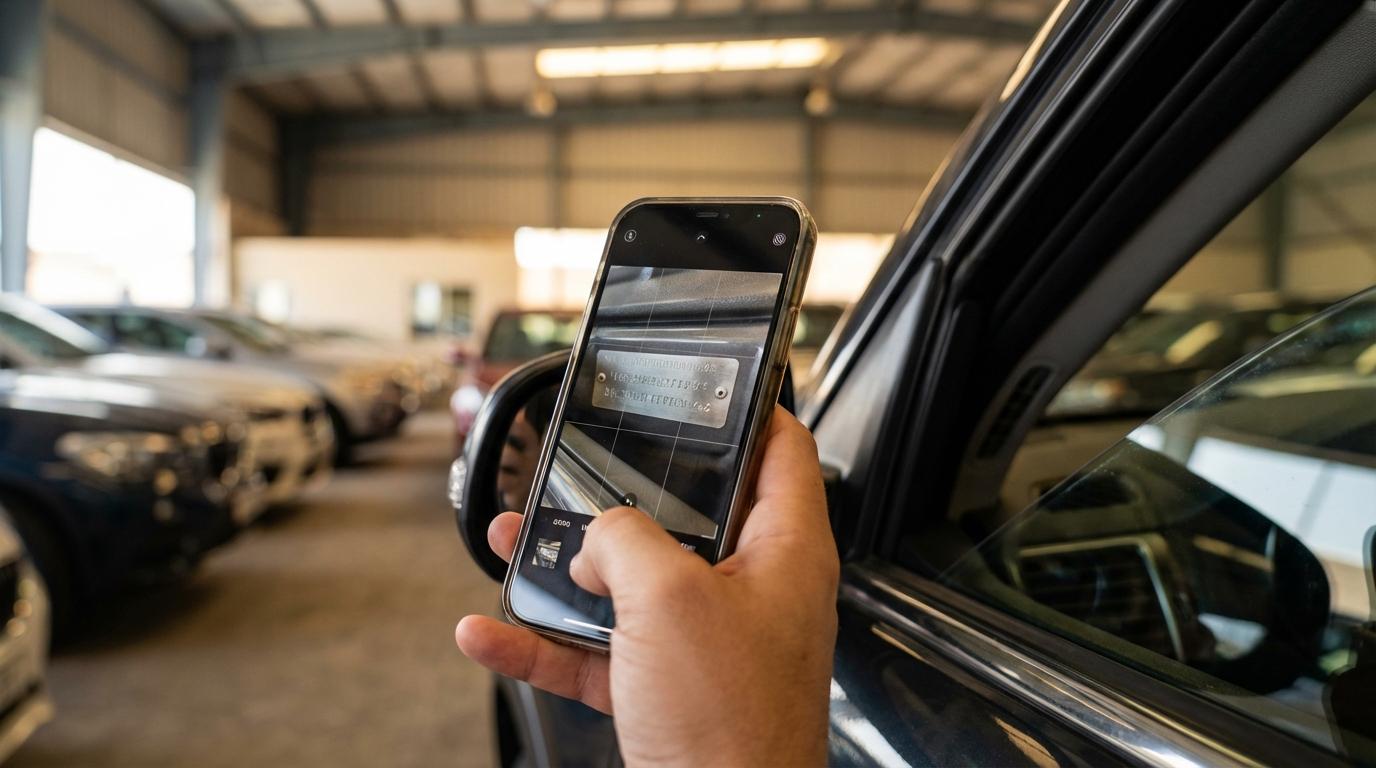
Ask for the VIN (chassis number) early. Then request photos that prove the VIN on the vehicle itself, not only on a document screenshot. If the car is already registered, ask for the plate and registration details where appropriate.
Also confirm the exact specification, since listings can be copied across similar units.
You want to be able to say, in writing: “My deposit reserves VIN X, model year Y, trim Z, mileage A, color B, with these disclosed conditions.”
## Ask for condition evidence that stands up to scrutiny
“Inspected” is meaningful only when you can read what was inspected, by whom, when, and with what results. A serious seller should be able to provide a condition report that is specific, supported by photos, and consistent with the listing.
If the vehicle is presented as pre inspected and verified, request the underlying documentation, not just a summary. Pay attention to the sections that typically create expensive surprises: structural repairs, cooling system, transmission behavior, suspension noise, and electronic faults.
A short video walkaround can also reveal details that photos hide, panel gaps, paint overspray, instrument cluster warnings, and how the engine sounds on cold start.
The table below can help you ask for the right items and understand what each one does for you.
| Evidence to request | What it confirms | Why it matters before a deposit |
|---|---|---|
| VIN photo on the vehicle + VIN on documents | Identity match | Prevents a deposit being applied to a different unit |
| Detailed inspection sheet with date and results | Current condition | Clarifies what “good condition” actually means |
| Paint and body photos in natural light | Cosmetic reality | Helps you price repairs and avoid surprises |
| OBD scan or diagnostic report (if available) | Hidden fault codes | Catches issues that do not show on a test drive |
| Service history or maintenance invoices (if available) | Care patterns | Reduces risk of neglected, high wear vehicles |
| Tire and brake measurements | Wear level | Gives a near term cost forecast |
| Accident or insurance history report (where available) | Prior damage | Supports valuation and resale expectations |
If you are not in Dubai to view the vehicle, consider commissioning an independent inspection. A seller who is confident in the car typically welcomes independent verification.
## Make the deposit terms explicit, in writing
The core questions are simple: how much, what does it reserve, and when do you get it back if something changes. The quality of the answers tells you a lot about how the transaction will go.
Ask for the deposit policy in writing and read it as if you were looking for problems, because that is exactly what it is for. If there is a terms and conditions page, save a copy or request a PDF version that is dated.
Distance sale rules vary by country. Some consumer protection frameworks treat a remote purchase as a distance sale and may grant cancellation rights within a set period if the buyer has not inspected the car in person. The UK Motor Ombudsman, as one example, explains that an online or phone deposit for a car seen only in pictures can fall under distance sale rules, with refund expectations in certain conditions. Your own jurisdiction may differ, so treat this as a prompt to verify local rules, not as a universal guarantee.
After you have reviewed the written policy, confirm the details with targeted questions:
- **Refundability:** Is the deposit fully refundable, partially refundable, or non refundable, and under what conditions?
- **Timeframes:** How many business days until the refund is processed, and by what method?
- **Trigger points:** What actions begin after deposit, vehicle reserved status, paperwork, shipping booking, deregistration, export steps.
- **Price protection:** Does the deposit lock the total price, or can fees be added later?
A professional seller should be comfortable putting these answers into the reservation invoice or a short deposit agreement.
## Payment method questions that protect you
How you pay matters as much as what you pay. Some payment channels have built in dispute options, while others are effectively final once funds leave your account.
Ask which payment methods are accepted and what documentation you will receive immediately after payment. You should receive a receipt that includes the company name, the amount, the date, and the vehicle identifiers.
Also confirm that you are paying through secure pages when using online payments. A basic check is that the payment page uses HTTPS and the domain is correct.
Here are practical payment focused questions to ask before you send a deposit:
- Credit card acceptance and surcharge policy
- Bank transfer beneficiary name and bank details letter
- Whether an escrow option is available for cross border transactions
- Whether deposits can be split (small initial hold, balance after inspection review)
If the seller pushes for an urgent transfer to a personal account, pause. A legitimate business should be able to receive funds in the business name and provide formal receipts.
## Delivery, export, and cross border responsibilities
For buyers in [Kenya](https://zamansafi.com/carsforsaleinkenya), [Uganda](https://zamansafi.com/carsforsaleinuganda), [Tanzania](https://zamansafi.com/toyotaintanzania), Zambia, [Malawi](https://zamansafi.com/usedcarsforsaleinmalawi), and other destinations, the deposit is often the point when logistics begin. That means you need clarity on who does what, and who pays for what, from the UAE onward.
Start with the basics: Incoterms or shipping terms if they are used, port of discharge, estimated sailing dates, insurance coverage during transit, and what documents you will receive for clearing and registration.
A seller with experience shipping from Dubai into African markets should be able to outline the document pack clearly: invoice, export certificate (if applicable), bill of lading, inspection certificates required by the destination, and any supporting documents requested by local authorities.
Ask what happens if timing slips. Delays can occur for reasons outside anyone’s control, port congestion, documentation corrections, vessel schedule changes. What you want is a plan and a communication standard.
## Total cost clarity: deposits are only the first line item
Deposits feel small compared to the full purchase, yet they can mask the real budget if the buyer has not mapped the total cost. This is where small businesses, fleet buyers, and first time importers benefit from a structured quote.
Request an all in estimate that shows the vehicle price plus predictable add ons. If the seller offers trade ins or financing, request written examples with interest rates, down payment assumptions, and any lender fees. If you are exporting, ask whether the quote includes shipping, inspection, and documentation, or whether those are billed separately.
A short cost sheet is not a formality. It helps you compare offers across dealers and avoid choosing a car that becomes uncompetitive once the full pipeline is priced.
## Put every promise into a reservation document
A deposit should never be paid against a chat thread alone. You want a reservation invoice or purchase agreement that is signed or formally issued by the seller, and that includes the details you would need if there is any dispute later.
This is also where you confirm what “reserved” means. Does the seller stop advertising the vehicle? For how long? Can it be sold to someone else if you do not pay the balance by a certain date? These are reasonable policies, but they must be explicit.
Use this simple checklist to keep the paperwork tight:
1. Vehicle identifiers (VIN, make, model, year, trim, mileage) on the invoice.
2. Deposit amount, currency, and date, with a clear statement of what it reserves.
3. Refund and cancellation terms written in plain language.
4. Delivery method, estimated timeline, and responsibility for shipping insurance.
5. List of documents you will receive and when you will receive them.
6. Balance payment schedule and accepted payment methods.
7. Any warranty terms, or a clear statement that the vehicle is sold without warranty.
When these items are present, paying a deposit online becomes what it should be: a confident step toward ownership, supported by evidence, paperwork, and a seller who communicates with clarity.